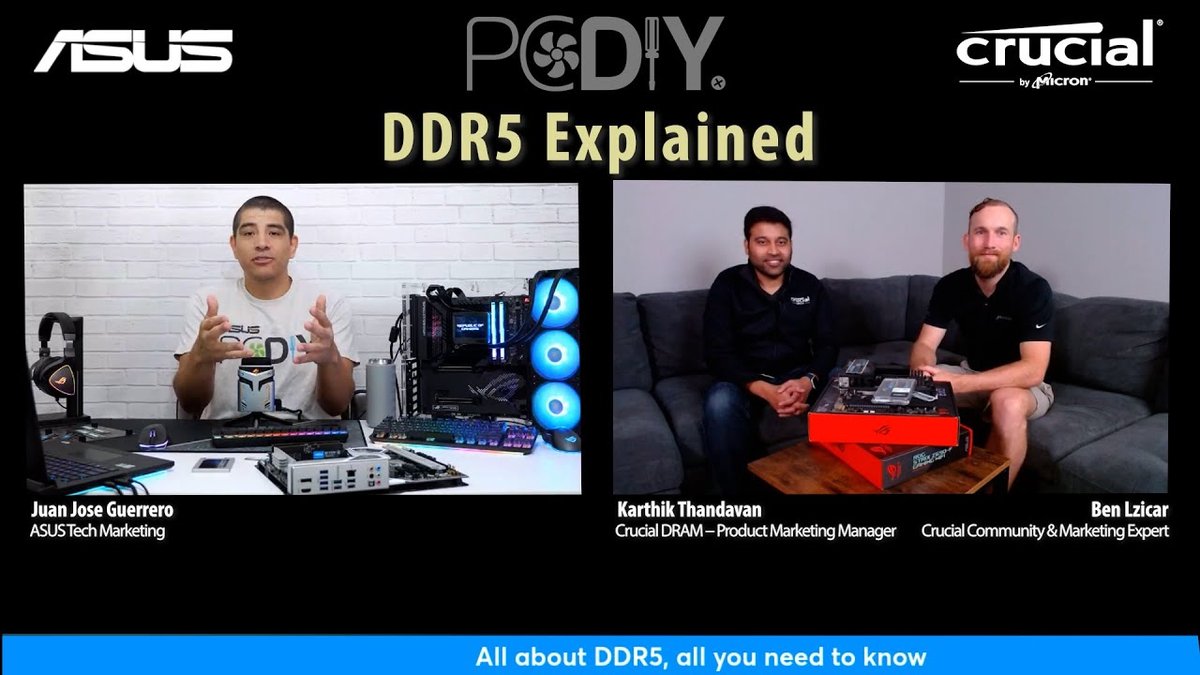
In the ever-accelerating world of computing, the demands placed on our machines are growing exponentially. From rendering complex 3D models to processing vast datasets and, of course, pushing the boundaries of gaming, our PCs need more than just a powerful CPU and GPU—they need memory that can keep up. Enter DDR5 RAM Explained: The Next Generation of Memory, the technology engineered to unleash the full potential of today's, and tomorrow's, high-performance systems.
DDR5 isn't just an incremental upgrade; it's a fundamental shift designed to tackle a critical bottleneck that has plagued multi-core CPUs: declining memory bandwidth per core. If you've been wondering how to extract every last ounce of performance from your cutting-edge processor or future-proof your next PC build, understanding DDR5 is your essential first step.
At a Glance: What You Need to Know About DDR5 RAM
- Speed Demon: DDR5 starts where DDR4 maxed out, offering significantly higher transfer rates right from the gate (4,800MT/s vs. DDR4's 3,200MT/s). Future speeds are projected to hit staggering highs.
- Bandwidth Beast: It delivers up to 2x the system bandwidth of DDR4, ensuring your CPU has plenty of data to chew on, preventing frustrating slowdowns.
- Capacity King: Individual DDR5 modules can hold up to 128GB (for consumers), blowing past DDR4's limits and offering unprecedented upgrade potential, especially for systems with fewer memory slots.
- Power Sipper: Operating at a lower voltage (1.1v compared to DDR4's 1.2v), DDR5 is more energy-efficient, translating to better battery life for laptops and cooler operation for desktops.
- Smart Design: Technical improvements like two independent 32-bit channels per DIMM enhance memory access efficiency, making every transaction count.
- Broad Compatibility: Recommended for the latest high-performance platforms from Intel (13th/14th Gen Core) and AMD (Ryzen 7000/8000 Series) to maximize their capabilities.
- Better Value: While initially pricier, DDR5 has become increasingly affordable, making it a sound investment for new builds.
Why DDR5 RAM Matters: Solving the Bandwidth Bottleneck
For years, CPUs have been adding more and more cores, offering incredible parallel processing power. But there was a catch: the memory subsystem wasn't keeping pace. Imagine a super-fast chef with 16 hands (your 16-core CPU) but only a tiny spigot delivering ingredients (your memory bandwidth). The chef can only work as fast as the ingredients arrive.
This is the problem DDR5 was designed to solve. With DDR4-3200, an 8-core CPU enjoyed 4.2 GB/s of bandwidth per core. Sounds good, right? But put that same memory on a 16-core CPU, and suddenly each core is only getting 2.1 GB/s. That's a halving of effective bandwidth, hindering your powerful CPU from reaching its full potential.
DDR5 reverses this trend. For example, DDR5-5600 on a 16-core CPU allows each core to access far more data, ensuring your processor isn't left waiting. It's about feeding those hungry cores with the data they need, when they need it, allowing you to truly extract the power from the latest CPU architectures.
The Pillars of Performance: What Makes DDR5 So Revolutionary?
DDR5 isn't just a number bump; it's a completely re-engineered memory standard built for the demands of modern computing. Let's break down the core advancements that make it stand out.
Blazing Speed and Unprecedented Bandwidth
When DDR5 launched, its baseline speed of 4,800MT/s (MegaTransfers per second) was a substantial 50% faster than DDR4's maximum JEDEC standard of 3,200MT/s. This isn't just a theoretical gain; it translates directly into a more responsive system.
Think of it like widening a highway. More lanes mean more cars (data) can flow through at once. DDR5 effectively doubles your system's bandwidth compared to DDR4, providing a massive pipeline for data transfer. While launch speeds started at 4,800MT/s, commercially available Crucial DDR5 memory modules already operate at 4,800, 5,200, 5,600, and even 6,000MT/s, with future products projected to push well beyond 8,800MT/s. This incredible headroom ensures that DDR5 will remain relevant and powerful for years to come.
Beneath the Surface: Architectural Innovations
The raw speed increase is impressive, but DDR5's true genius lies in its internal architecture. It boasts several technical improvements designed to maximize efficiency:
- Double the Burst Length and Banks: DDR5 doubles the burst length (how much data can be accessed in a single burst) and significantly increases the number of memory banks and bank groups. This allows the memory controller to access data more efficiently and keep the data flowing without interruptions.
- Two Independent Channels per DIMM: Unlike DDR4, where a single DIMM (Dual In-line Memory Module) operated as one 64-bit channel, DDR5 DIMMs (for non-ECC modules) are effectively split into two independent 32-bit channels. This allows for more granular and simultaneous data access, further boosting overall memory access efficiency. It's like having two smaller, dedicated express lanes on that data highway rather than one large, potentially congested one.
Latency: A Misunderstood Metric
When people first look at DDR5, they often notice higher CAS (Column Access Strobe) latency numbers compared to DDR4. For example, DDR4-3200 might have a CL22, while early DDR5-4800 might be CL40. A common misconception is that higher CL always means slower RAM. However, this isn't the full picture.
Latency, in simple terms, is the delay between when a memory controller requests data and when the data becomes available. With DDR5's higher clock speeds, each clock cycle is much shorter.
Let's look at the "true memory latency" (CL divided by clock speed):
- DDR4-3200 CL22: (22 / (3200 MT/s / 2)) * 1000 = 13.75 ns
- DDR5-4800 CL40: (40 / (4800 MT/s / 2)) * 1000 = 16.67 ns
While DDR5-4800 CL40 has a slightly higher true latency, it adds only about ~3% more to system-level latency compared to DDR4-3200 CL22. Crucially, this difference is virtually undetectable by users in real-world scenarios. Moreover, standard JEDEC memory's true and system latencies have remained remarkably consistent (13-16 ns true, 90-100 ns system) from DDR1 all the way through DDR5, showing that advancements in speed and architecture are designed to maintain or improve overall responsiveness despite individual timing numbers.
Unprecedented Capacity for Demanding Workloads
One of DDR5's most significant, and often overlooked, advantages is its vastly increased capacity potential. DDR5 memory dies can reach an impressive 64GB per chip, a substantial leap from DDR4's 16GB cap.
This translates directly into massive individual stick capacities:
- Consumer Systems: Individual DDR5 modules can reach up to 128GB.
- Enterprise Workstations & Servers: Capacities can climb to an astonishing 256GB per stick.
Current Crucial DDR5 modules are already available in common densities like 8GB, 16GB, 24GB, 32GB, and 48GB, with 128GB on the horizon. This is a game-changer for upgradeability, especially for systems with a limited number of DIMM slots. Imagine building a compact workstation with only two memory slots, yet being able to equip it with 256GB of RAM—that's a reality with DDR5. This immense capacity unlocks new possibilities for content creators, data scientists, and anyone running memory-hungry applications.
Power Efficiency: Green Computing Gets Greener
In an era where energy consumption is a growing concern, DDR5 also brings significant power efficiency improvements. DDR5 operates at a lower voltage of 1.1v, which is 0.1v less than DDR4's 1.2v. While this might seem like a small difference on a single stick, it adds up quickly across multiple modules in a desktop, server, or data center.
For laptop users, this reduced voltage directly translates into improved battery life, offering more productivity on the go. For desktop users, it means less heat generation, potentially leading to quieter systems and better component longevity. It’s a win-win, offering more performance while consuming less power. If you're looking to explore 5th generation Ram and its broader impact, power efficiency is a key consideration for future computing.
Who Will Benefit Most from DDR5 RAM?
While DDR5 is the future, certain users and platforms stand to gain the most from its immediate adoption.
The Power Users: Maximizing Next-Gen CPUs
DDR5 is highly recommended for users leveraging high-performance platforms like Intel’s 13th and 14th Gen Core processors and AMD’s Ryzen 7000 and 8000 Series. These modern CPUs are designed with DDR5 in mind, and pairing them with this next-generation memory is crucial for extracting their full potential. Without adequate memory bandwidth, even the fastest CPU can be bottlenecked, unable to process data as quickly as it could.
Professionals and Creatives: When Bandwidth is King
For those with memory-intensive workloads, DDR5 offers significant, tangible benefits:
- PC Gamers: While frame rates might not see astronomical jumps in every game, consistent high frame rates and improved minimum frame rates, especially in graphically demanding titles and open-world games, are common. The increased bandwidth helps the CPU and GPU communicate more efficiently, particularly in scenarios with complex physics, AI, or high-resolution textures.
- Content Creators: Video editors, graphic designers, and 3D artists will experience faster rendering times, smoother timeline scrubbing, and more responsive application performance. Working with large files and multiple layers demands substantial memory bandwidth and capacity, which DDR5 delivers in spades.
- Engineers and Data Scientists: Running simulations, complex calculations, or processing massive datasets requires rapid access to vast amounts of memory. DDR5's higher capacities and bandwidth can drastically reduce computation times, accelerating workflows and research.
- Workstation Users: Professionals in architecture, software development, and scientific research who rely on powerful workstations will find DDR5 essential for maintaining productivity when juggling multiple demanding applications simultaneously.
The global demand for content creation, distribution, and consumption continues to grow, driving the need for more capable hardware. As a result, DDR5 adoption is steadily rising across the board, moving from an enthusiast-only niche to a mainstream component for serious PC users.
Navigating the Switch: Compatibility and Your Next PC Build
Deciding to move to DDR5 involves more than just picking up new memory sticks. Here's what you need to know about compatibility and how to make the transition.
Motherboard is Key
The most critical factor for DDR5 compatibility is your motherboard. DDR5 memory modules use a different pin layout (288 pins, but with a different key notch position) and electrical signaling compared to DDR4. This means a DDR5 stick will not physically fit into a DDR4 slot, and vice versa.
- Current Intel Platforms: Intel's 12th, 13th, and 14th Gen Core CPUs are unique in that they support both DDR4 and DDR5 memory. However, the specific motherboard you choose will dictate which memory standard you can use. Some motherboards are designed exclusively for DDR4, others exclusively for DDR5, and a select few high-end boards might even offer variants that support either.
- Current AMD Platforms: AMD's Ryzen 7000 and 8000 Series CPUs are exclusively designed for DDR5 memory. If you're building a new AMD system with these processors, DDR5 is your only option.
When planning a new build or a significant upgrade, always check your motherboard's specifications carefully to ensure it supports the memory you intend to use.
The Long-Term Investment: DDR5 from the Start
For new PC builds, especially those with Intel's 13th/14th Gen or any AMD Ryzen 7000/8000 series CPU, adopting DDR5 from the outset can be a smarter financial choice in the long run. While initial DDR5 module costs were higher, they have become significantly more affordable since their launch in 2021. Opting for DDR4 on a compatible Intel platform might save a small amount upfront, but it could limit your future upgrade path, potentially requiring a complete motherboard replacement down the line to switch to DDR5. Starting with DDR5 ensures your system is future-proofed for the next generation of memory advancements.
Memory Speed and Downclocking
It's also important to remember that higher-speed DDR5 memory will always downclock to the maximum speed supported by your motherboard and CPU. So, if you install 6000MT/s RAM into a motherboard that only supports up to 5200MT/s (or if your CPU's memory controller has a hard limit), the RAM will operate at the lower speed. This isn't a problem, just something to be aware of when purchasing to match your components effectively.
DDR5 vs. DDR4: A Side-by-Side Comparison
To truly grasp the generational leap, here's a quick comparison of key specifications between DDR4 and DDR5:
| Feature | DDR4 (Typical) | DDR5 (Typical & Future) | Impact |
|---|---|---|---|
| Launch Speed | 2133 MT/s | 4800 MT/s | Significant performance boost from the start |
| Max Speed | 3200 MT/s (JEDEC), 4800 MT/s (OC) | 6000+ MT/s (Commercially), 8800+ MT/s (Future) | Unprecedented bandwidth potential |
| Operating Voltage | 1.2V | 1.1V | Better power efficiency, less heat, longer battery life |
| Channels per DIMM | 1 (64-bit) | 2 (two 32-bit independent) | Improved memory access efficiency |
| Max Die Capacity | 16 GB | 64 GB | Enables much larger module capacities |
| Max Module Capacity | 64 GB (consumer) | 128 GB (consumer), 256 GB (enterprise) | Vastly increased memory potential for demanding tasks |
| Burst Length | 8 | 16 | More data accessed per burst, higher efficiency |
| On-DIMM Power Management | No | Yes (PMIC) | Improved power delivery and stability |
| CAS Latency (True Latency) | ~13-16 ns | ~13-17 ns | System-level latency remains comparable despite higher CL numbers |
Dispelling Common Myths and Misconceptions about DDR5
As with any new technology, DDR5 has its share of misunderstandings. Let's clear up a few:
"Higher CL Means It's Slower Than DDR4"
As discussed earlier, this is a simplified view. While DDR5 has higher CAS Latency numbers, its significantly higher clock speeds mean that the true latency in nanoseconds is very similar to, or even better than, DDR4. The crucial metric is system-level latency, which remains consistent across generations, ensuring that the user experience is fluid and responsive. Don't let a higher CL number deter you; look at the overall performance benefits.
"DDR5 is Only for Hardcore Enthusiasts and Overclockers"
While enthusiasts certainly benefit, DDR5's advantages extend far beyond the overclocking crowd. Content creators, professionals, and even mainstream gamers will experience noticeable improvements in application responsiveness, loading times, and overall system snappiness due to the increased bandwidth and efficiency. As prices have become more accessible, DDR5 is rapidly becoming the standard for any modern, high-performance PC build, not just the extreme end.
"It's Too Expensive to Justify the Upgrade"
When DDR5 first launched, it did come with a significant price premium. However, like all new technologies, prices have steadily decreased. Today, the cost difference between comparable DDR4 and DDR5 kits is much narrower, especially when considering the long-term benefits and performance gains. For a new build, the slightly higher investment in DDR5 can pay dividends in terms of future-proofing and unlocking the full potential of your other high-end components.
Your Next Steps: Embracing the DDR5 Future
DDR5 RAM represents a significant leap forward in memory technology, fundamentally changing how our computers handle data. It addresses long-standing bottlenecks, boosts performance across a wide range of applications, and sets the stage for even more powerful computing in the years to come.
If you're contemplating a new PC build or a major platform upgrade, DDR5 isn't just an option—it's the smart choice. Here's how to navigate your journey into the next generation of memory:
- Assess Your Needs: Are you a gamer, a content creator, an engineer, or simply someone who demands the best from their PC? If your workloads are memory-intensive, DDR5 will offer tangible benefits.
- Check Platform Compatibility: If you're building new, opt for the latest CPUs from Intel (13th/14th Gen) or AMD (Ryzen 7000/8000 Series) paired with a compatible DDR5 motherboard. If you're on an older Intel platform that supports both DDR4 and DDR5, consider the long-term upgrade path.
- Prioritize Bandwidth and Capacity: Don't just look at the highest clock speed. Consider how much memory (e.g., 32GB, 64GB) your primary applications require and then choose the fastest DDR5 kit within your budget that your motherboard supports.
- Don't Fear Latency Numbers: Remember that higher CL numbers on DDR5 don't automatically mean slower performance. Focus on overall system bandwidth and the real-world impact.
- Look for Value: Keep an eye on pricing. DDR5 has become more competitive, making it a sound investment that future-proofs your system and maximizes the performance of your other cutting-edge components.
By understanding the technical advancements and practical benefits of DDR5, you're now equipped to make informed decisions that will boost your next-gen PC's performance and efficiency, ensuring it's ready for whatever the future of computing throws its way.